

Taza is one of the largest First Nation developments in North America—an ambitious master-planned community on Tsuut’ina Nation, just steps from southwest Calgary, shaped through partnership, cultural guidance, and a deep respect for place. Every pathway and public space is informed by teachings shared by Tsuut’ina Elders and knowledge keepers, shaping Taza Park’s Village Development Guidelines and guiding how the community continues to grow.
Honouring Place: The Land as First Teacher
A central principle shared throughout the planning of Taza is that everything begins and ends with the land. Taza’s Design Director, Judith MacDougall, explains that Elders encouraged the design team to understand their responsibility to place and to the land. “The land is constant—we are here for a certain amount of time, and with that comes responsibility. If you live here, you carry an understanding of where you are and what the land means.”

Developing the Village Development Guidelines required years of listening, learning, and cultural stewardship. Judith worked closely with the Cultural Committee, a group of Elders and knowledge keepers who guide how Tsuut’ina teachings and history are reflected in Taza’s built environment.
Judith often describes this work as standing in an “in-between place,” where learning emerges through humility and relationship. “You’re in this hybrid world of being respectful of both who you are and where you are,” she says. “It’s an incredible learning opportunity.”
Builders echoed this experience of learning through relationship. Melissa Friesen, Managing Director, Preconstruction for Crystal Creek Homes, notes that their team quickly understood that “every decision needed to come back to the land, how a home sits on it, how residents move through it, and how materials reflect it.”
For Brookfield Residential, the cultural training provided by Tsuut’ina Elders reset their design expectations. As Senior Manager, Business Development, Luke Staniscia explains, “It wasn’t about adding cultural elements, it was about understanding what belongs, what doesn’t, and why.”

Designing Within a Cultural Framework
One of the most distinctive elements of the Village Development Guidelines is a two-part design approach that allows cultural principles to be integrated thoughtfully and respectfully.
The guidelines separate the design into two complementary layers. The first is massing, the overall shape and form of a building and how it sits on the land. At Taza, these primary elements remain natural and grounded, with materials and palettes inspired by the surrounding environment.
The second layer introduces expressive elements: doors, railings, colours, trims, or art panels where cultural storytelling can appear subtly but meaningfully. These are the details residents encounter up close, creating opportunities for connection without relying on overt symbolism or appropriated imagery.
Both builders described how this two-layer approach clarified their design choices. “It gave us a framework for where meaning should live,” Melissa Friesen says. “The structure remains grounded in the land, and the details allow us to express connection in subtle, respectful ways.” Luke Staniscia adds that the approach “helps avoid over-designing. It maintains integrity — architectural and cultural.”
This framework protects cultural integrity while supporting creative interpretation from builders. It also encourages collaboration with Tsuut’ina artists whose work enriches placemaking throughout Taza Park.
Unique Placemaking Rooted in Tsuut’ina Identity
Beyond individual homes, Taza’s placemaking strategy reinforces a strong sense of cultural identity across the community. Street names reflect Tsuut’ina language and geography, while public art and murals developed with Tsuut’ina artists help bring cultural stories to life throughout the community.
These elements help ensure Taza Park feels connected to the land and expressive of the Nation whose teachings shape it.
Principle-Based Design: Sustainability and Connection
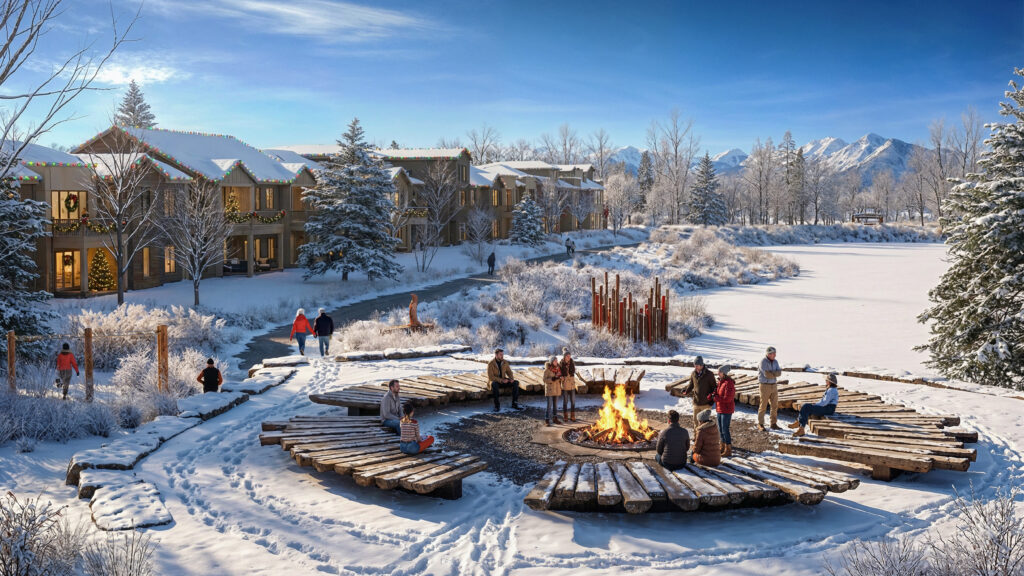
The guidelines also embed principles of stewardship and sustainability, supporting Taza’s vision of creating one of the most thoughtful, sustainably-driven communities near Calgary. Access to green space is built into every design through discovery paths, community gardens, and proximity to natural reserves like the Weaselhead Flats. Gathering spaces, central to Tsuut’ina culture, are intentionally placed to foster connection and reflection. These principles speak to both cultural stewardship and modern community-building values.
How Builders Are Bringing the Guidelines to Life
Across Taza Park, builders have embraced the Village Development Guidelines not as constraints but as creative inspiration. Many began their process with cultural training led by Elders, which shaped how they approached land, materials, and community design.
For Melissa, the cultural training was foundational. “We grounded our design approach in respect for the land, connection, and community, values shared with us through conversations with Tsuut’ina Elders,” she says.
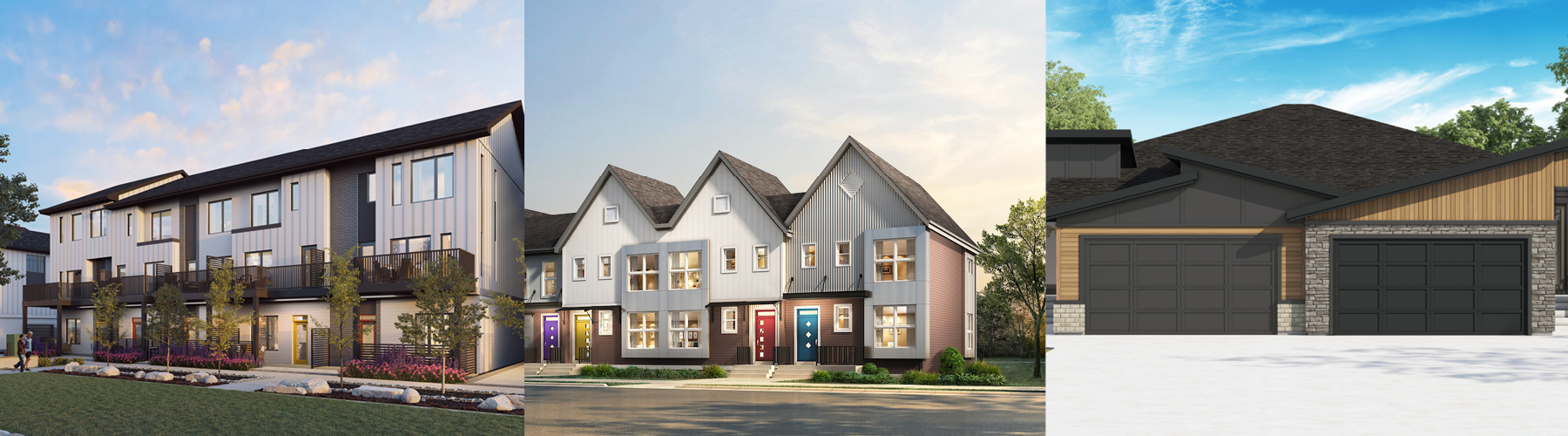
Crystal Creek’s design for Juniper Ridge features a network of discovery paths, connecting every home to the wetlands and the Weaselhead Flats Natural Environment Park. “We’re especially proud of the interconnected design of the site,” Melissa notes. “It strengthens the sense of place for residents and reflects the flow and movement that are so important in Tsuut’ina culture.
Crystal Creek also collaborated with a Tsuut’ina artist to create custom bench panels placed throughout the community. These artworks offer “touchpoints of cultural storytelling,” Melissa says, subtle expressions of identity woven into daily life.
Luke Staniscia recalls how their design journey began. “We started our process with a full cultural training day, and that became our grounding point,” he says. Brookfield was designing its homes at the same time the guidelines were being finalized, which Luke describes as “a partnership—we were all building toward the same goals.”
One of Brookfield’s most meaningful design lessons came through a conversation about etched panels. Luke Staniscia recalls that their team initially explored a decorative panel inspired by Tsuut’ina motifs. After sharing it during cultural training, Elders explained why the approach wasn’t appropriate. “It was a turning point,” Luke says. “We realized that cultural expression isn’t something you replicate — it’s something you collaborate on. That discussion reshaped how we approached every detail.” The final design became more understated and rooted in nature, honouring the insight shared with them.
Their design choices include accent colours inspired by local flowers and vegetation, gathering spaces positioned intentionally for social connection, and plans for artwork and expressive features that reflect Tsuut’ina stories. “We wanted culture to inform design in a subtle, genuine way,” Luke explains, “not as decoration, but as something meaningful.”
These contributions highlight how different builders interpret the guidelines while staying grounded in shared cultural principles.
Judith MacDougall’s Lasting Impact on Taza’s Design Vision
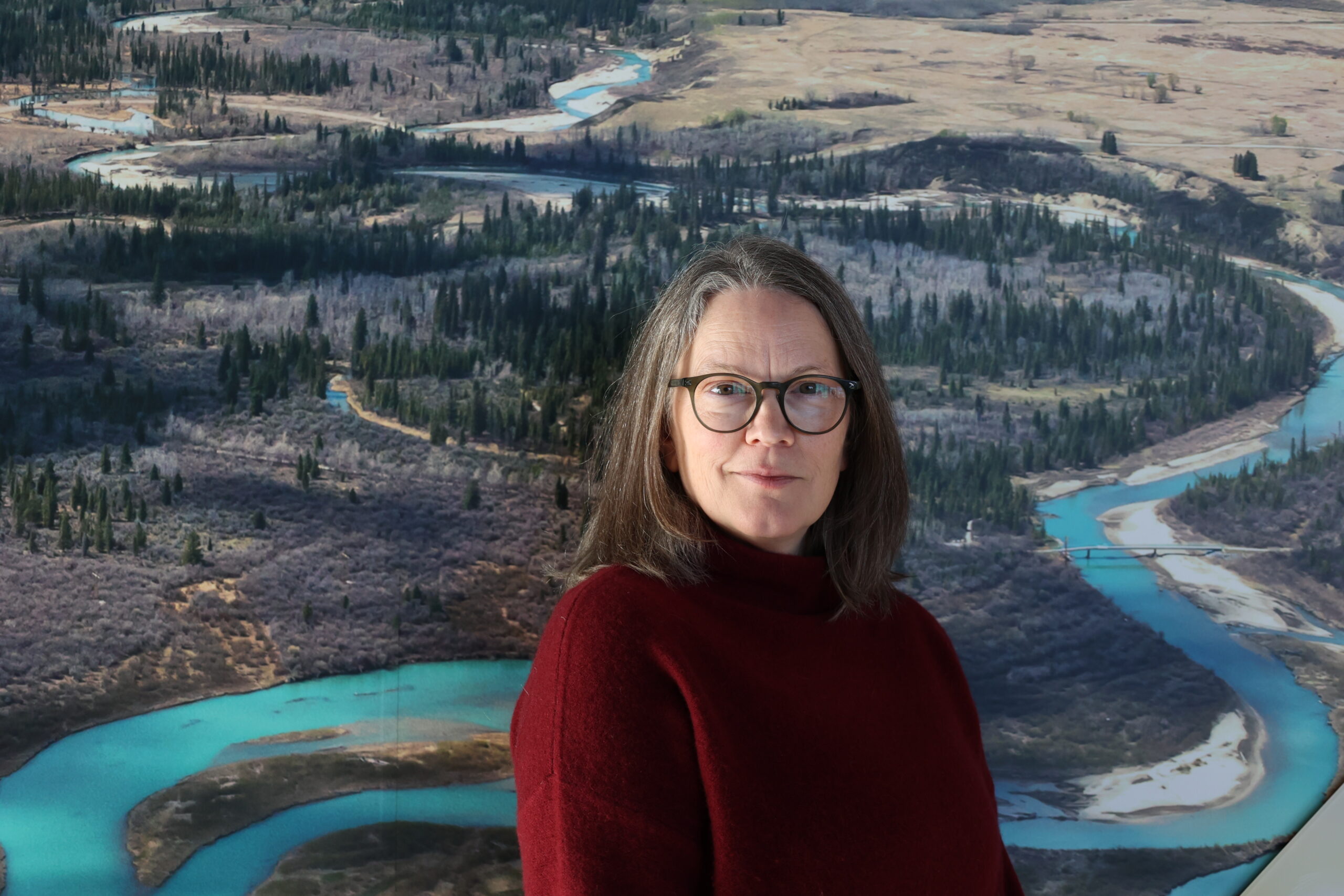
This work would not be possible without the leadership of Judith MacDougall, whose creativity and dedication helped shape the Village Development Guidelines and Taza’s broader design identity. As Judith concludes her role with Taza, her influence is visible in every material palette, pathway, gathering space, and cultural detail. Her commitment to listening first and designing second has set a foundation that will guide Taza’s growth for years to come.
Continue the Journey with Us
To learn more about homes and community design at Taza Park, visit the Sales & Marketing Centre or sign up for our newsletter to follow the development as it takes shape across Tsuut’ina Nation.