How connection to the land, intentional design and long-term planning are shaping Taza Park into a bold, evolving community
Sustainability at Taza Park isn’t a checkbox. It’s a discipline, practiced, tested and refined over time. Guided by Tsuut’ina Nation’s relationship with the land and water, Taza rethinks the link between natural systems, building performance, and daily life. Instead of isolated green features, the community’s framework starts with the land itself – how it has been cared for over generations – and extends into every design decision that follows.
This stewardship lens informs one of Taza’s core pillars: Nature and Connection to the Land, and grounds the work as the vision becomes a reality. The result is a place where sustainability isn’t hidden behind the scenes. It is visible, celebrated, and part of how people live.
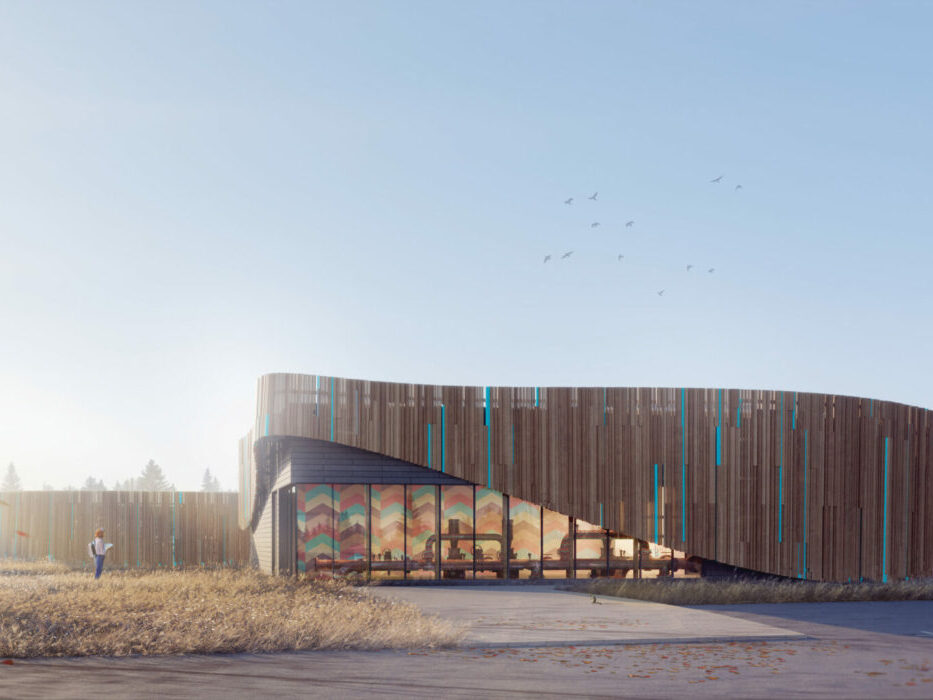
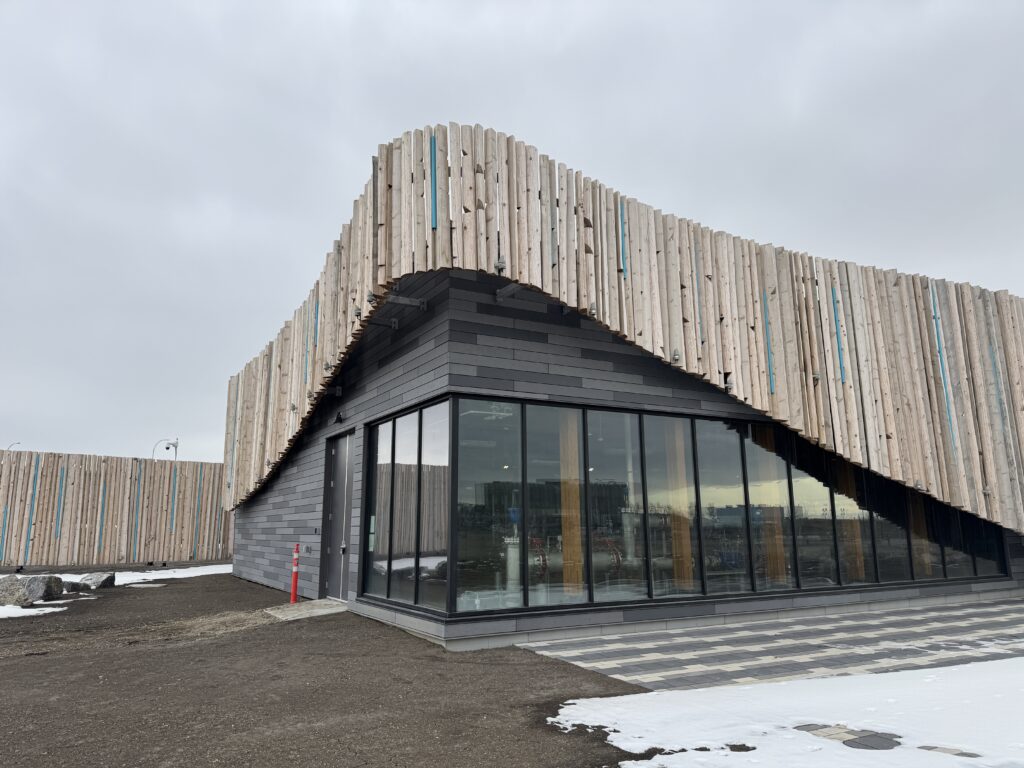
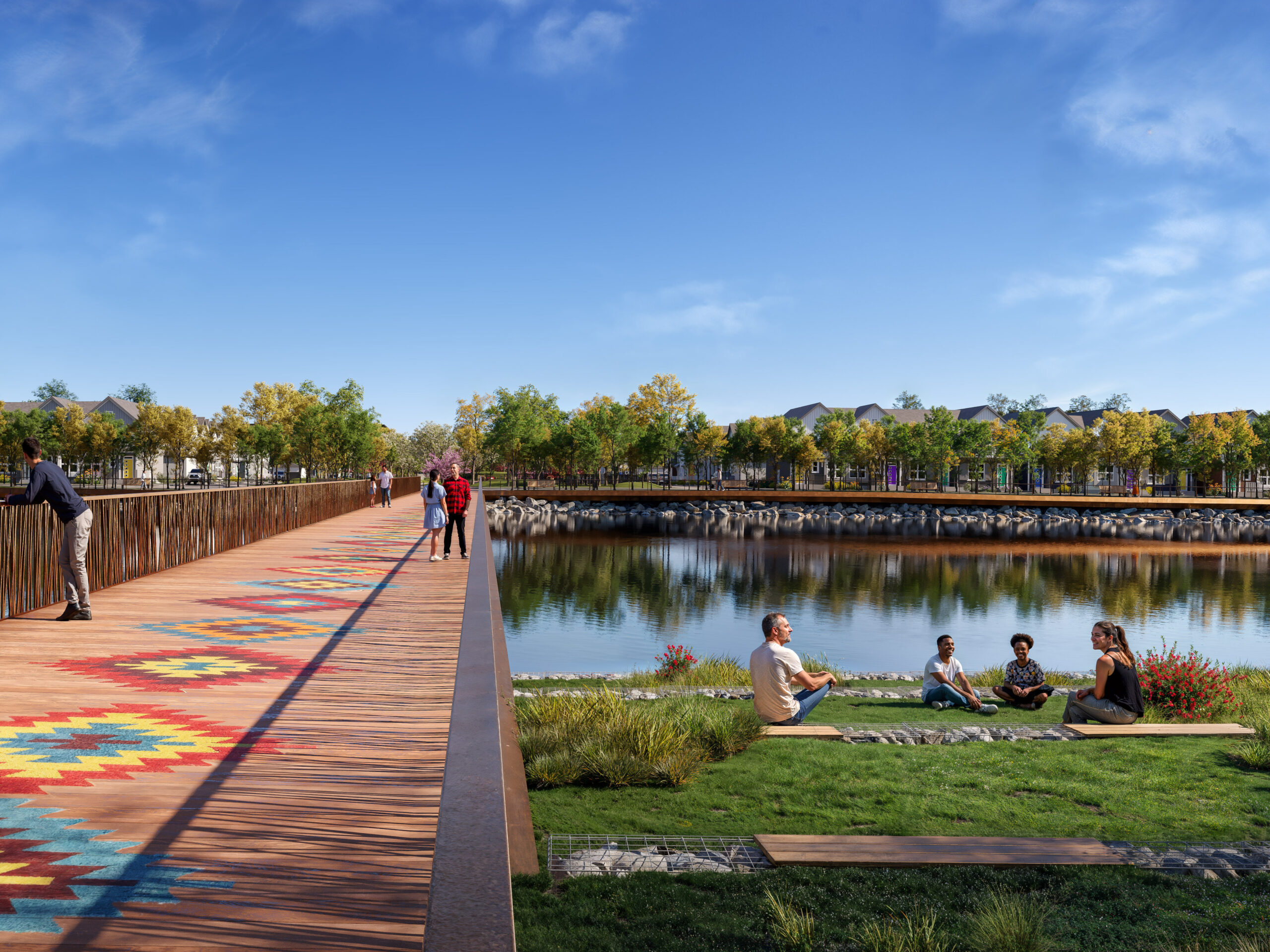
Designed by Zeidler Architecture in collaboration with WSP, the Taza Park Reservoir is a keystone for current and future growth. It is built to serve more than 16,000 people with integrated fire storage, equalization, and emergency capacity. It marries performance with meaning. With a design concept developed in collaboration with Tsuut’ina Nation Knowledge Keeper, Hal Eagletail, the design recognizes water’s cultural significance and its connection to the land.
The reservoir’s presence is intentional. By making water infrastructure visible, Taza invites residents to understand and value the systems that sustain the community. This approach has earned national recognition, including a Canadian Architecture Awards of Excellence. It is proof that infrastructure can be resilient, beautiful, and culturally grounded.
Explore how design and culture shaped the reservoir
Architecture that Generates: Integrating Renewable Energy into the Everyday
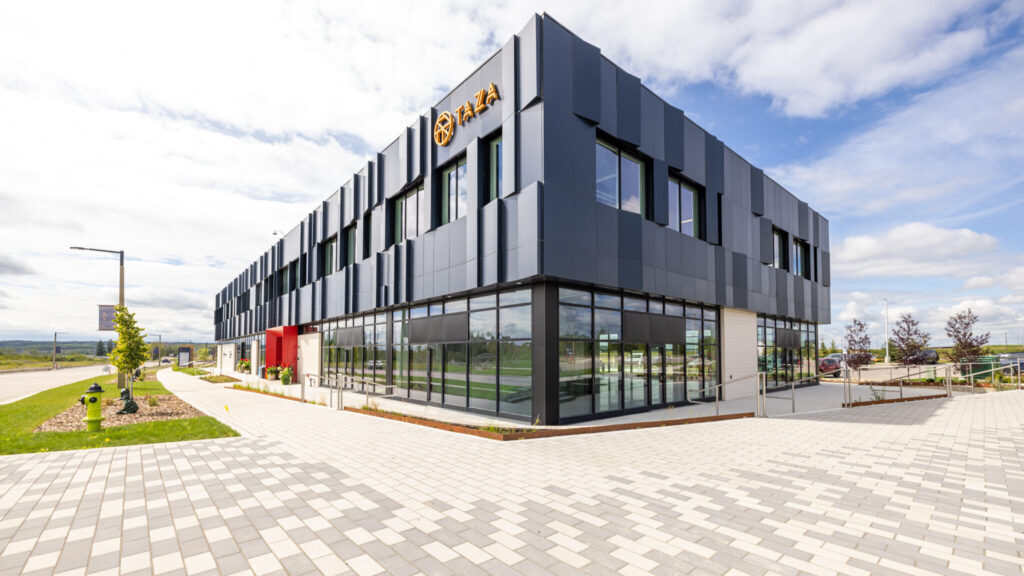
At Taza Park, buildings don’t just consume energy – they create it. The Sales & Marketing Centre solar facade integrates power generation directly into the architecture, proving that renewable systems can be an aesthetic and functional asset.
- Since launch last May, the system has produced 33.2 MWh of clean energy, avoiding roughly 13,000 kg of CO2 emissions.
- The facade demonstrates how distributed generation can scale across future phases, reducing operational carbon while maintaining design integrity.
In the words of Chris Brown, Director, Construction: “We have generated 33.2 megawatt hours of solar power since going online last May. That’s equivalent to saving 13,000 kilograms of CO₂ emissions.” It’s a clear signal: climate-positive design belongs in everyday commercial and community buildings, not just in pilot projects.
Designing with Nature, Not Against It: Wetlands as Working Infrastructure
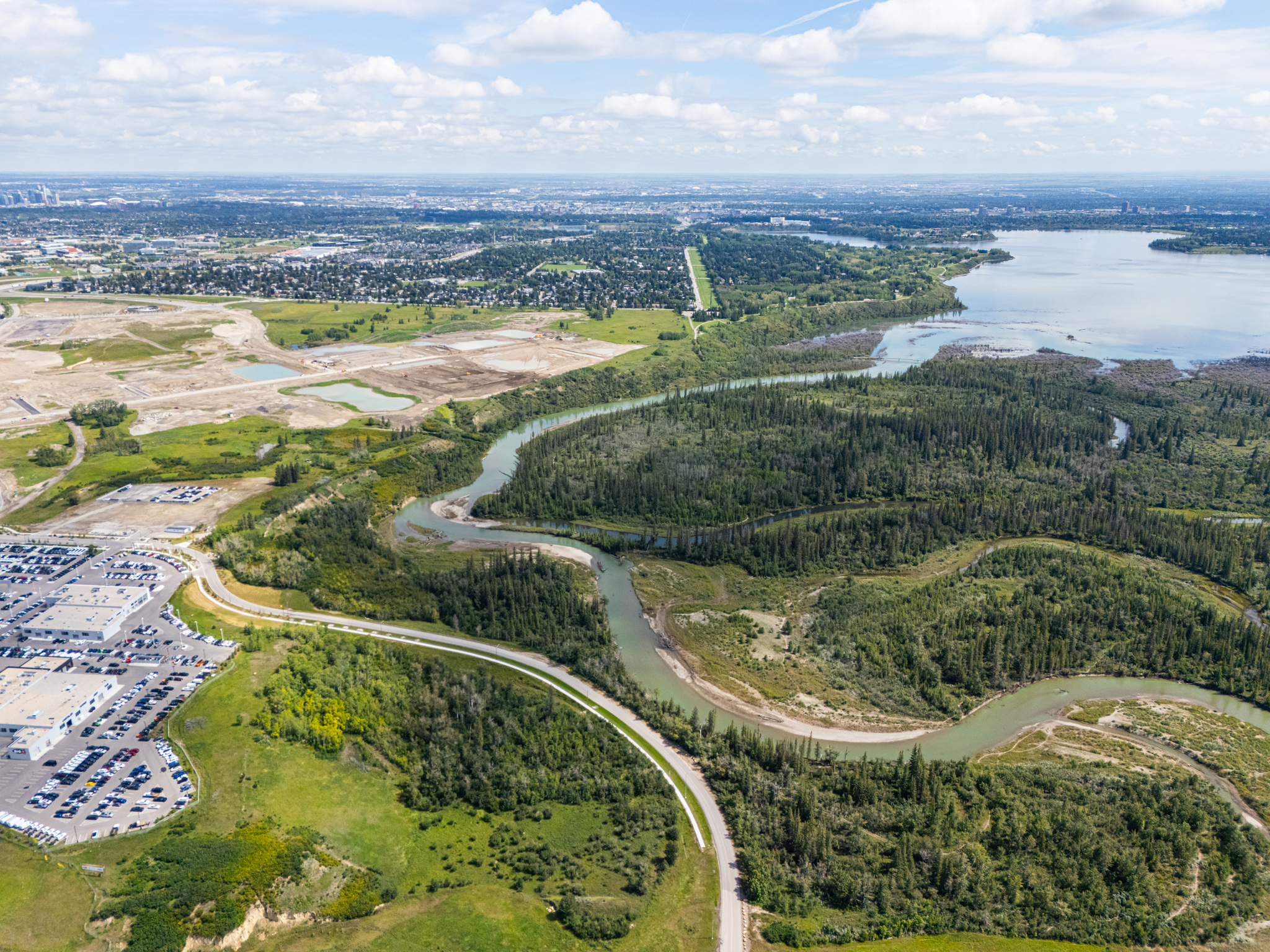
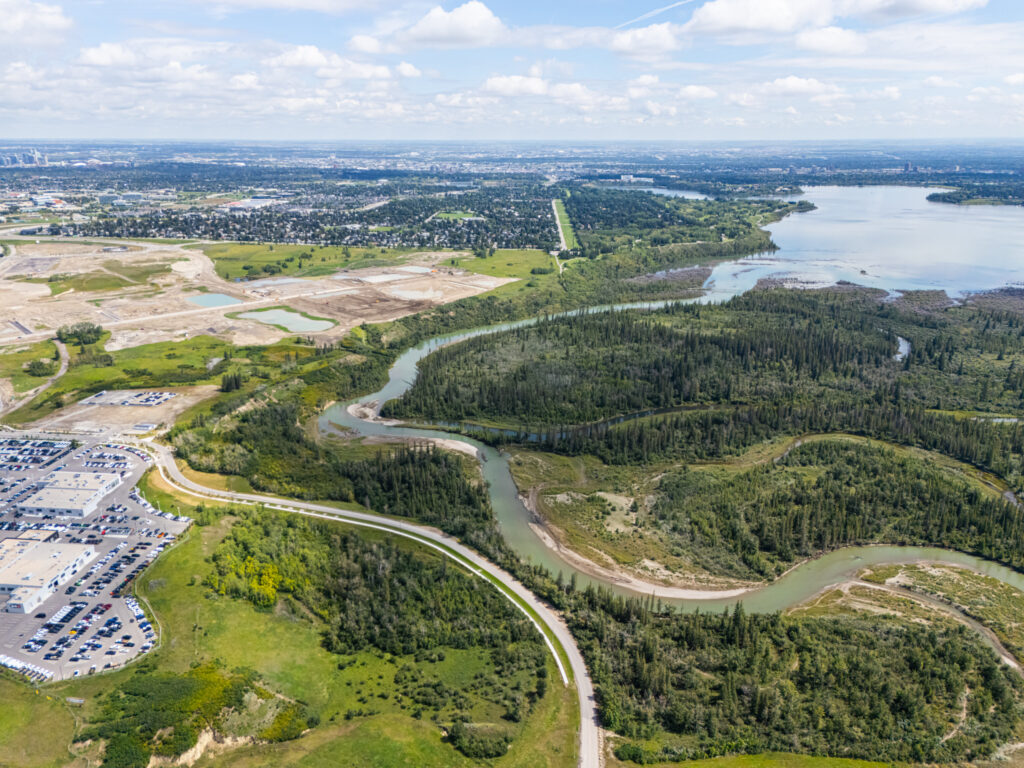
Across Taza Park, natural systems aren’t constraints. They are the blueprint. Water moves through a series of ponds into a naturalized wetland that connects to the Weaselhead Flats and the Elbow River. Along the way, the system slows, and improves water quality before it returns to the river, delivering ecological performance alongside flood resilience.
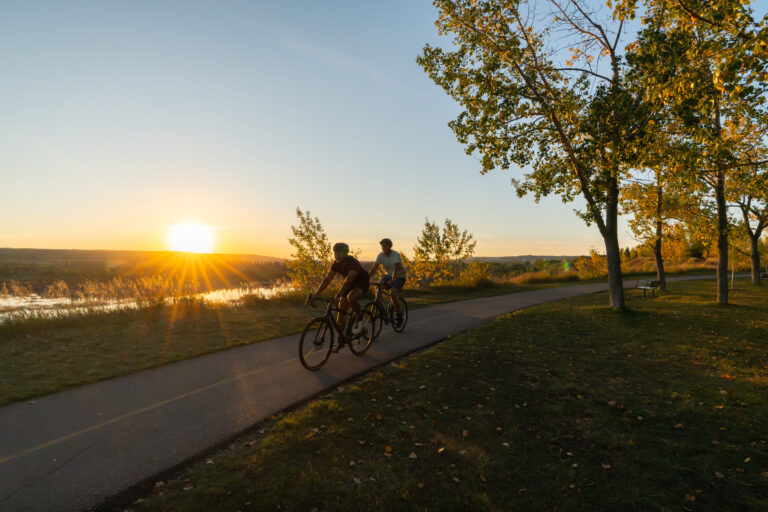
The result is a softer edge between the built and the natural – a living transition zone that supports habitat, frames views, and invites people into a more organic landscape. As trails and plantings mature, these spaces fold into daily routines as places to walk, cycle, watch wildlife, and experience the seasons.
“This approach moves away from purely engineered infrastructure and instead emphasizes water quality, habitat value, and a more organic landscape,” says Travis Oberg, VP Land Development. Taken together, these choices offer a clear model for how urban growth can enhance, rather than erode, ecological function.
Homes and Habits that Endure: Evolving Standards for Green Living
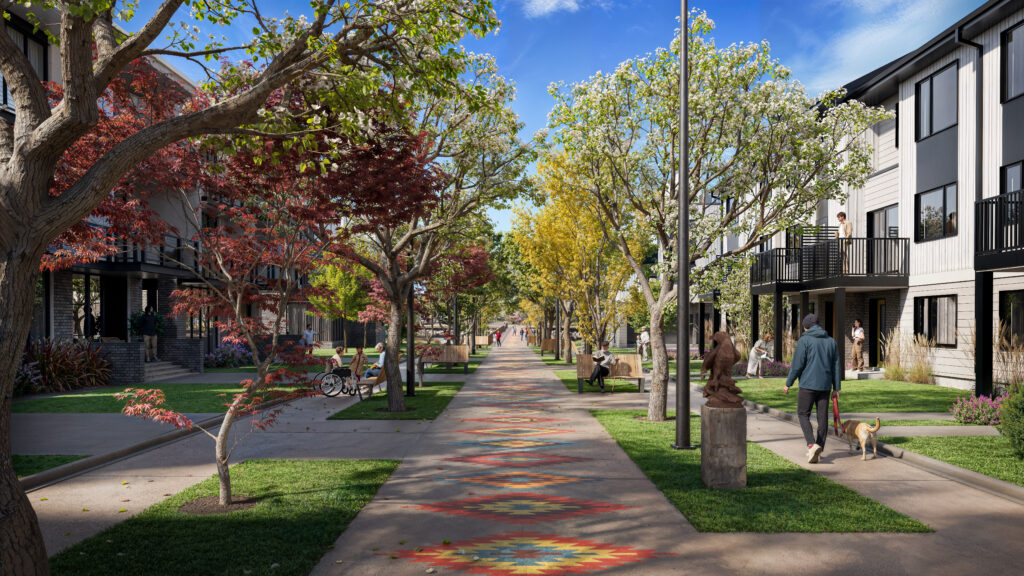
Sustainability at Taza evolves as the community grows. At the residential scale, our commitment to Built Green Gold sets a high bar for energy performance, healthy materials, and long-term durability – and we choose builder partners who share that vision. Commercial projects are held to similar frameworks, embedding operational efficiency and low-carbon strategies into new development.
But the most powerful shift happens in daily life. Parks, greenways, and streets are designed to make walking and cycling the default choice. With future cycling infrastructure and expanded pathways on the way, Taza keeps strengthening active mobility and reducing reliance on vehicles.
“One of the most impactful sustainability outcomes is reducing reliance on vehicles. Parks and public spaces encourage walking, gathering, and local activity,” says Oberg. This is sustainability you can feel: shorter trips, more time outdoors, and stronger social connection.
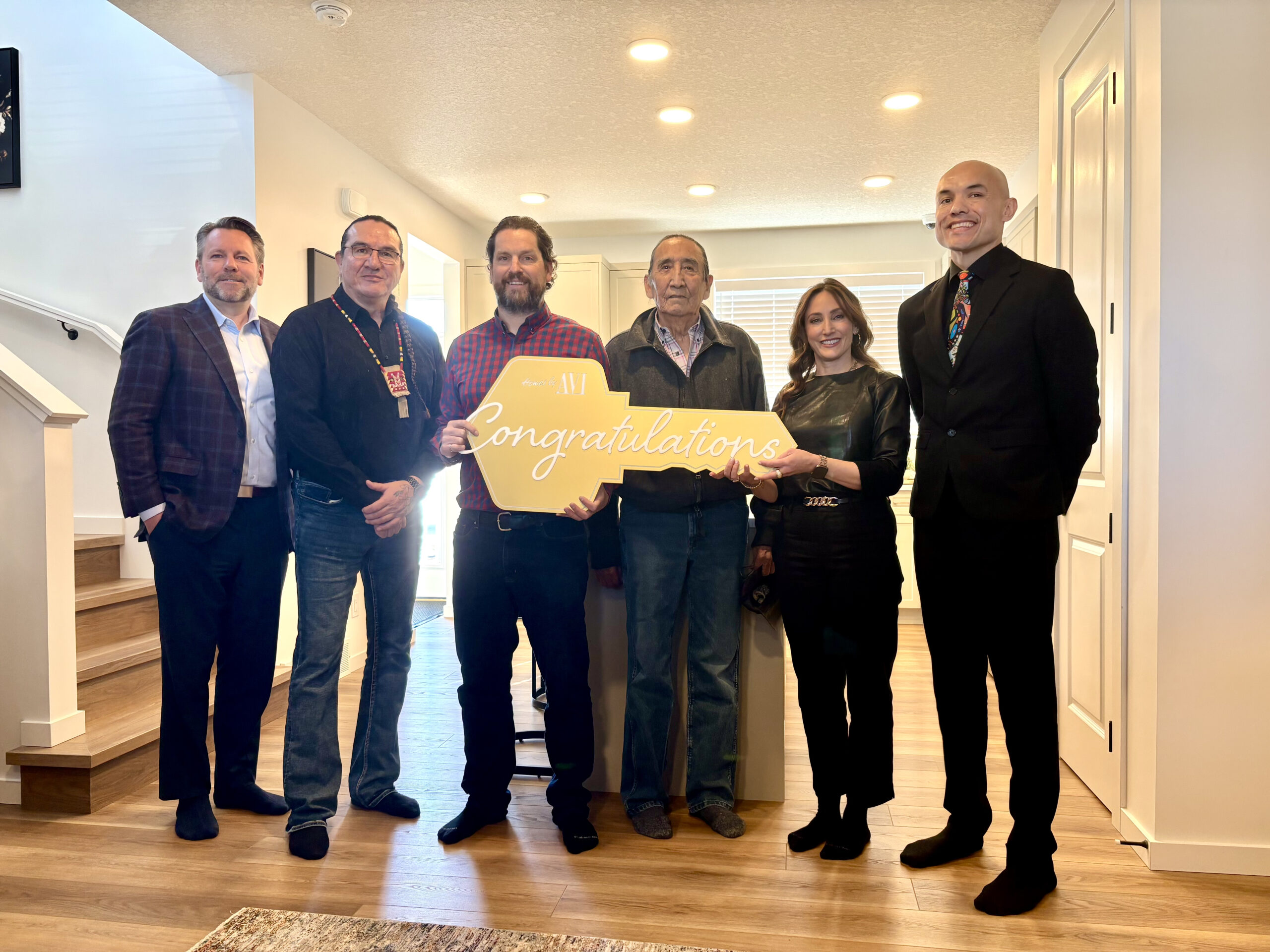
Governance as Stewardship: Co-Creating with Tsuut’ina Nation
Real sustainability requires shared leadership. Monthly working groups between Taza and Tsuut’ina Nation bring land, water, culture, and development to the same table. These conversations ensure that planning decisions align with stewardship values and long-term outcomes.
Randy Dodginghorse, Taza’s Director of Tsuut’ina Relations, underscores the significance of this process: “My hope is that new residents initiate an ongoing learning process around respecting the Nation’s history and the land they reside on.” This is sustainability as a relationship – continuous, respectful, and forward-looking.
From Vision to Practice: What Taza Teaches About Sustainable Communities
- Govern collaboratively: Sustainability endures when decision-making includes Indigenous knowledge and community voices.
- Make systems visible: When residents see and understand critical infrastructure, they value and protect it.
- Treat natural systems as partners: Wetlands, vegetation, and hydrology can do heavy lifting for water quality, biodiversity, and climate resilience.
- Design for performance and beauty: Renewable energy and low-carbon strategies can be integrated seamlessly into architecture.
- Plan for behaviour, not just buildings: Walkability and proximity drive meaningful emissions reductions
Moving Forward Together
As Taza continues to take shape, our sustainability approach will evolve with it. Land stewardship, visible water systems, energy-generating buildings, and nature-first planning are not add-ons; they’re the core of how this community lives.
Visit the Sales & Marketing Centre to experience these initiatives firsthand and see how culture and design come together to share a future-ready community.