
From pet-friendly placemaking to innovative sustainability, discover what makes Taza Park a unique destination to live, visit and explore.
SUMMARY
- Uncover unique features that maximize livability in Taza Park
- Understand how sustainability and culture are part of the foundation of the community design.
- Discover how Taza Park’s leasehold model adds value for homeowners
If you’ve driven along Glenmore Trail or Tsuut’ina Trail lately, you’ve probably noticed something new taking shape: fresh asphalt, framing on the rise and a community village growing where the two roads meet. That’s Taza Park, a 470-acre village on Tsuut’ina Nation, just west of southwest Calgary. Families have been receiving their keys since early 2026, and the community keeps growing.
Taza Park brings a little bit of everything together: homes, shops, restaurants, workspaces, connected pathways and more than 50 acres of green space. Housing options span a wide range, from Homes by Avi’s Aurora street townhomes and Brookfield Residential’s Rhythm townhomes to Crystal Creek Homes’ Juniper Ridge Villas and Black Birch Heights condos. Living in Taza Park means morning walks to the edge of Weaselhead Flats, a future Retail Main Street within strolling distance of your front door, and a quick commute to downtown Calgary or a day trip to the Rocky Mountains.
Some of the most interesting things about Taza Park won’t show up on a floor plan, though. Here are seven features you might not know about.
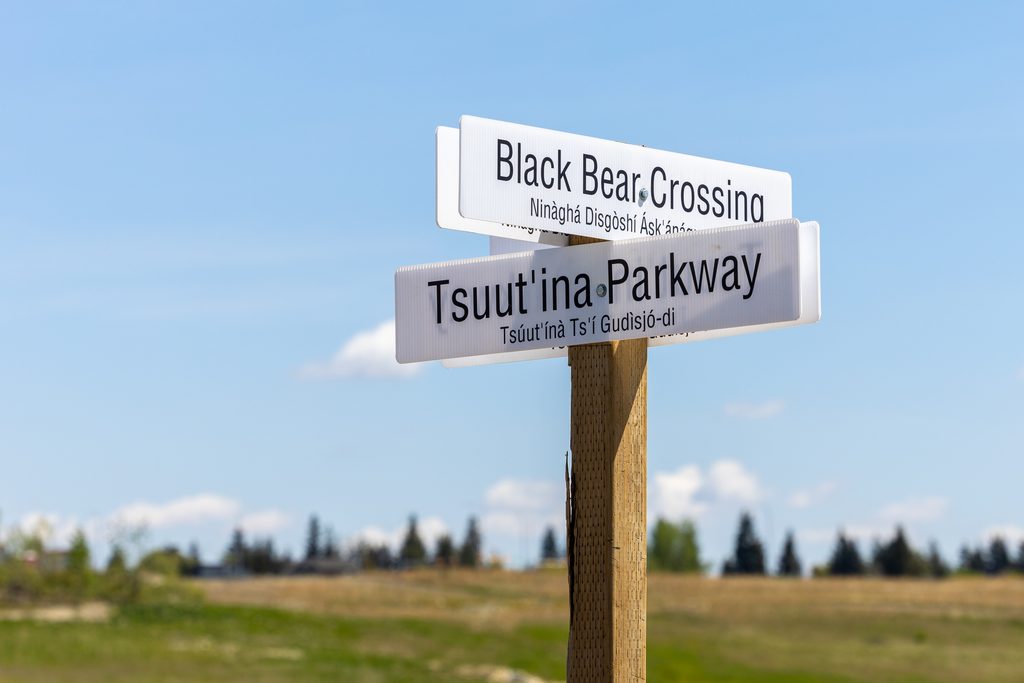
1. Street names SHAPED THROUGH CULTURAL CONSULTATION
very street name in Taza Park comes out of a collaborative consultation process. Taza Development Corp’s Land Development team proposes each name and presents it to the Tsuut’ina-Taza Cultural Advisory Working Group, which offers insight and guidance and gives final approval before a name goes up on a sign. Each name draws on Tsuut’ina culture and carries a Tsuut’ina Dene translation, and many reference the animals, plants and natural elements central to Tsuut’ina teachings. On Chokecherry Street, chokecherry trees will anchor the streetscape.
The street signs are only the beginning. The same cultural guidance shapes the landscaping: look for sweetgrass in the parks, beadwork-inspired patterns in streetscape details and public art by Tsuut’ina artists telling stories of land, water, wind and fire.

2. PET ZONES WITHIN A 10-MINUTE Walk
Dog owners, take note: Taza Park plans green space for dogs and their people alike. Four public green spaces will include designated pet zones, and most residents will live within a 10-minute walk of one. A place to throw a ball or play chase is never far away. Up for a longer outing? The pathway system connects to Weaselhead Flats and North Glenmore Park.
On days when the temperature drops below freezing or the wind picks up, Petfinity at The Shops at Buffalo Run is a short drive away. Its 15,000 square feet of indoor play space includes a separate area for dogs who prefer a private play zone, plus daycare, boarding, grooming, training, rehab and a puppy pool.

3. LIGHTING DESIGNED TO PROTECT THE NIGHT SKY
Step outside on a clear night in most cities and the Milky Way is nowhere to be seen. Taza Park takes a different approach. Carefully selected site lighting directs light down to where people need it, rather than up and out into the sky, helping protect the natural darkness over Tsuut’ina Nation.
For residents, that means better stargazing from the front step. It also lets plants, wildlife and insects keep their natural rhythms, which matters in a community that borders Weaselhead Flats.
Dark-sky lighting is one part of Taza’s broader sustainability foundation, guided by Tsuut’ina values and teachings and supported by planning and engineering best practices. You’ll see it throughout the community, from ecological corridors that connect natural systems to landscaping with local trees, plants and grasses.
4. leasehold ownership is simpler than it sounds
Tsuut’ina Nation land can’t be sold. Instead, buyers purchase homes at Taza Park under a leasehold model. You own your home and everything built on the land, and you lease the land itself from the Nation under a prepaid, 99-year term.
The model is more familiar than it sounds. Calgary’s University District, Banff, Jasper and Redwood Meadows on Tsuut’ina Nation all operate under a similar structure. It also comes with real advantages:
- No land payments. The lease is prepaid, with nothing extra to pay on the land for the length of the term.
- Homeowner rights. You can buy, sell, finance and renovate, much as you would with a freehold property.
- Financing options. Mortgages are available to qualified buyers, and BMO now offers home equity lines of credit at Taza Park.
- Long-term security. Agreements with Canada recognize the lease to the end of its term. At least five years before it ends, the Nation will either extend it by a minimum of 25 years or purchase the home at its appraised value.
- Value. Without the cost of the land, leasehold homes are often priced below comparable freehold homes.
5. a water reservoir designed as a landmark
Utilities infrastructure rarely makes for a good story. Taza Park is the exception.
The dedicated reservoir and pumphouse replace aging infrastructure and provide a consistent supply of water for Taza Park residents, Tsuut’ina Nation and surrounding communities, with capacity to grow alongside the community.
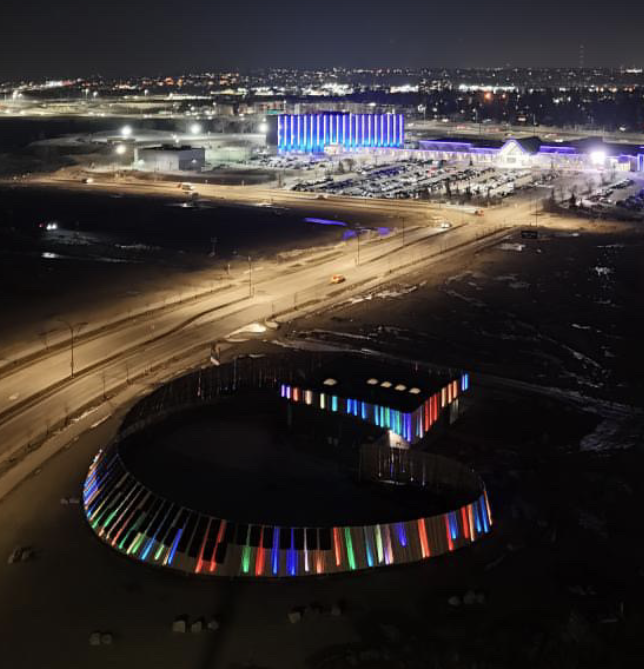
Designed by Zeidler Architecture, the reservoir earned a 2020 Canadian Architect Award of Excellence. A few of its standout details:
- A fence inspired by the beaver dam. The Tsuut’ina are known as the “Beaver People,” and the curving wooden fence around the buried reservoir references both a beaver dam and the conical shape of a tipi. Western Canadian cedar and repurposed poles from Tsuut’ina Nation form its posts.
- Solar power. Panels mounted on the fence supply most of the pumphouse’s electricity, part of a design targeting net-zero emissions.
- A gateway to the community. The reservoir doubles as a landmark entrance to Taza Park, with space for a permanent Tsuut’ina art installation.
- A window on the works. A glass wall on the pumphouse lets passersby watch the water system in action and learn about water conservation.

6. A WHOLE COMMUNITY PURSUING Built Green certification
Green building is usually measured one home at a time. Taza Park takes a wider view. It is one of the first communities in Canada to participate in Built Green Canada’s community certification program, which evaluates how an entire community is planned and built rather than assessing homes individually. The program recognizes progressive practices across every area of development: carbon, air quality, water, waste, wellness, durability and more.
Taza Park’s builders share that commitment. Brookfield Residential’s Rhythm townhomes, for example, are Built Green Silver certified.
7. part of north america’s largest Indigenous-led development
Zoom out, and Taza Park is one piece of something much bigger. Taza spans 1,200 acres across three villages (Taza Park, Buffalo Run and The Crossing), making it the largest Indigenous-led development in North America.
Partnership makes it work. Taza is a 50/50 partnership between Tsuut’ina Nation and Canderel, with equal seats at the board table. Tsuut’ina culture guides everything from street names to landscape design, while Canderel brings decades of development experience.
That partnership is already delivering. Families began moving into Taza Park in early 2026, condominiums have widened the range of housing options, and Walmart is coming as the first major grocer tenant of the 470-acre Taza Park community. Each milestone supports a long-term vision: lasting prosperity for the Nation and a vibrant, sustainable community for everyone who lives, works and gathers here.
Discover more of Taza Park
These features are only the beginning. The best way to experience Taza Park is to see it in person.
Visit the Sales & Marketing Centre. Explore the community, meet the builders and take in the rotating Art Wall at 5894 Tsuut’ina Parkway, Suite 150, Tsuut’ina, AB. The centre is open Monday to Thursday from 1 to 7 p.m. and weekends and holidays from 12 to 5 p.m. (closed Fridays), with complimentary parking..
Chat with the sales team. Curious about the leasehold model, financing or available homes? Call 403-539-6121.
Stay in the loop. Hear first about new home releases, community news and events. Sign up to receive updates on residential opportunities in Taza Park.